« I want to create a work that everyone can make their own and for which we can neither give the origin, nor the time, that it is a universal symbolic sign. »
From war painting to the forest
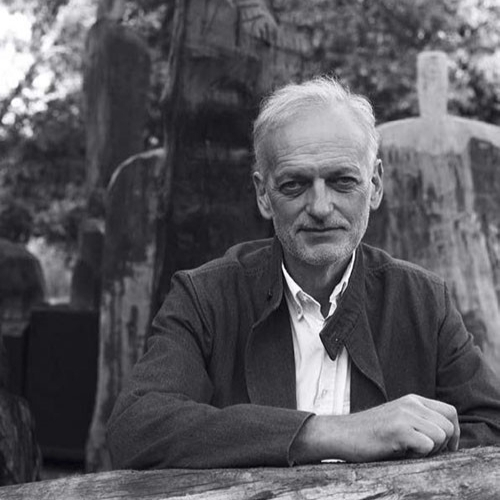
Christian Lapie was born in 1955 on a farm in Champagne, land ploughed by the Great War. He studied at the Beaux-Arts de Reims (1972-1977) then at the ENSBA in Paris (1977-1979), and returned to settle in Val-de-Vesle. First a painter, he works with chalk, oxides, and ash on tarpaulins, then sheets, cement, burnt wood. War and Peace (1992, FRAC) and War Game (1995, censored) show a political brutality that is still very much « contemporary Western art ».
The Amazon and the faceless figures
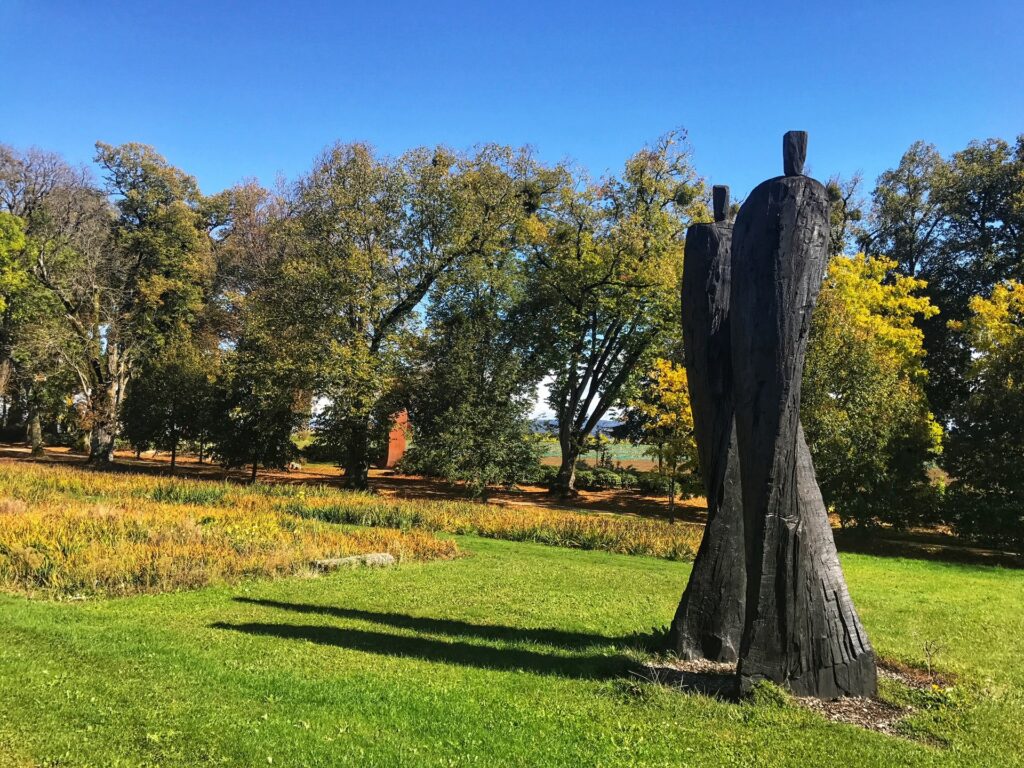
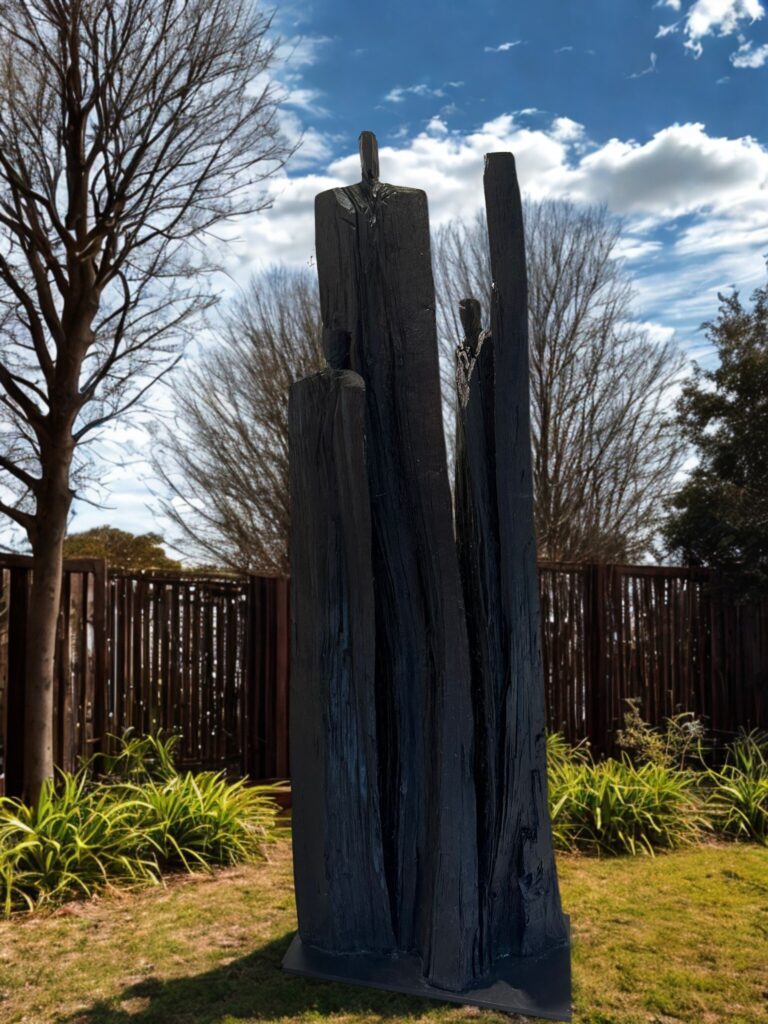
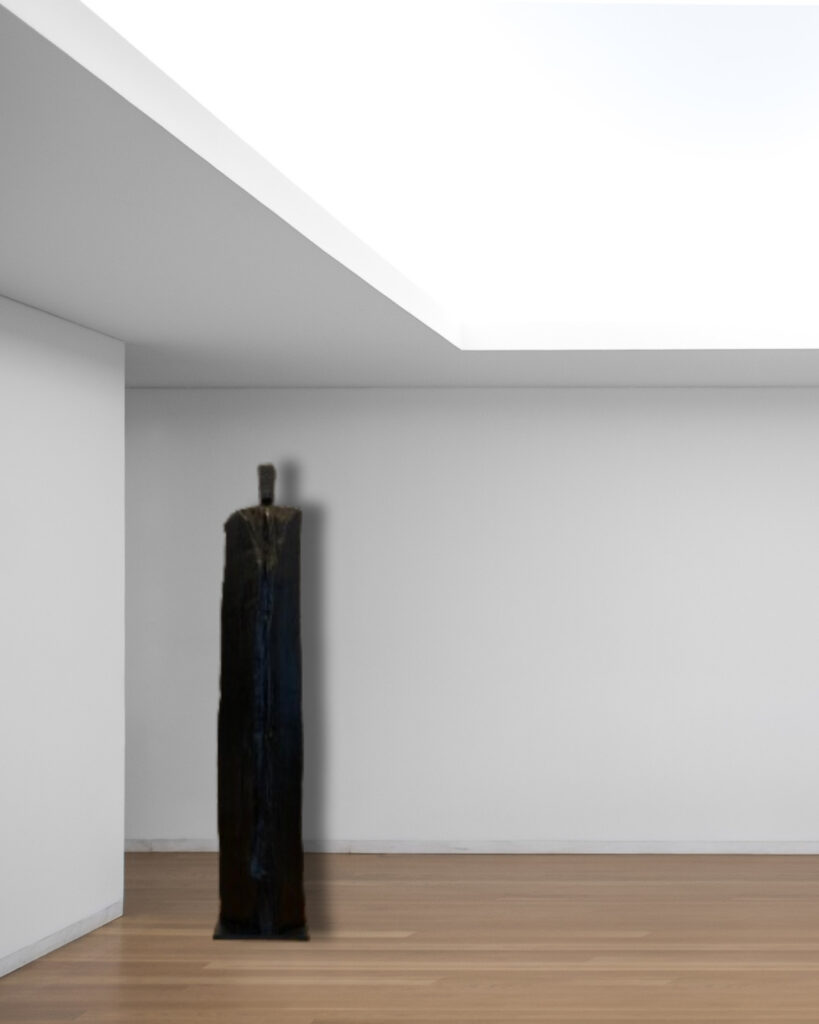
In 1992, invited to Rio for Arte Amazonas, he understands that his ironic speech does not speak to everyone. He wants a sign « of which we can neither give the origin, nor the time ». From trunks split with the chainsaw are born silhouettes without arms or face, calcined, drawn up in groups. Fort 61 in Japan, The Crow’s Nest in Canada, In Path of the Sun and the Moon in Jaipur, Constellation de la douleur au Chemin des Dames (2007): figures travel from Champagne to the world.
Sentinels of a collective time
Lapie also installs Le Pupitre des étoiles at the park of Sceaux, with cast iron, stones, and storm oaks. In 2019, Rodez asked him to pay tribute to Soulages for his centenary. His groups, from the same split tree, say the unit that produces the multiple. Work of memory without military illustration: black presences, soft and hard, which stand in a field like standing dead.