Painting, we don’t talk about it, we don’t analyze it, we feel it.
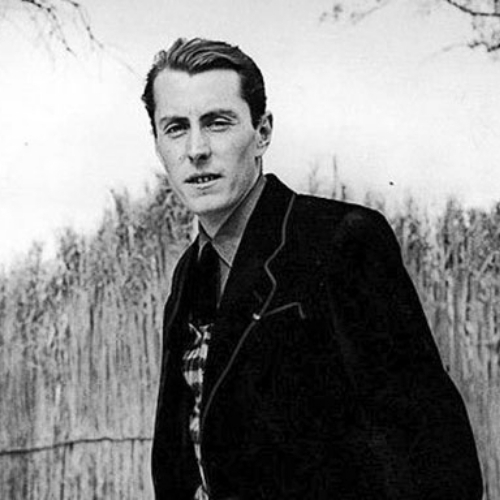
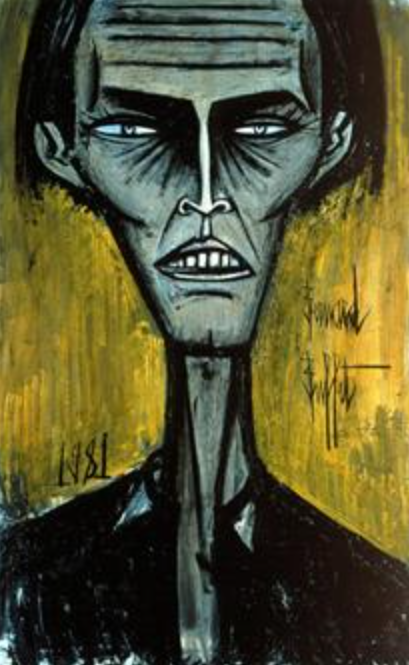
French painter, engraver and lithographer. A major figure in post-war figuration, he imposed from the late 1940s an immediately identifiable style, characterized by angular black strokes, emaciated shapes and an expressive intensity that earned him the label of « miserabilist ». His work, of exceptional productivity (more than 8,000 pieces), crosses the themes of solitude, melancholy, war, circus, urban landscapes and great literary stories.
Painter of line and existential anxiety
Born in Paris on 10 July 1928, Bernard Buffet grew up in a bourgeois environment and very young at the École nationale supérieure des beaux-arts. He quickly leaves to work alone, developing from the age of eighteen a radical plastic language that propels him to the forefront of the French art scene. Crowned by the Prix de la Critique in 1948, he became in a few years one of the most famous and controversial figures of his time, celebrated by the public as much as attacked by part of the critics.
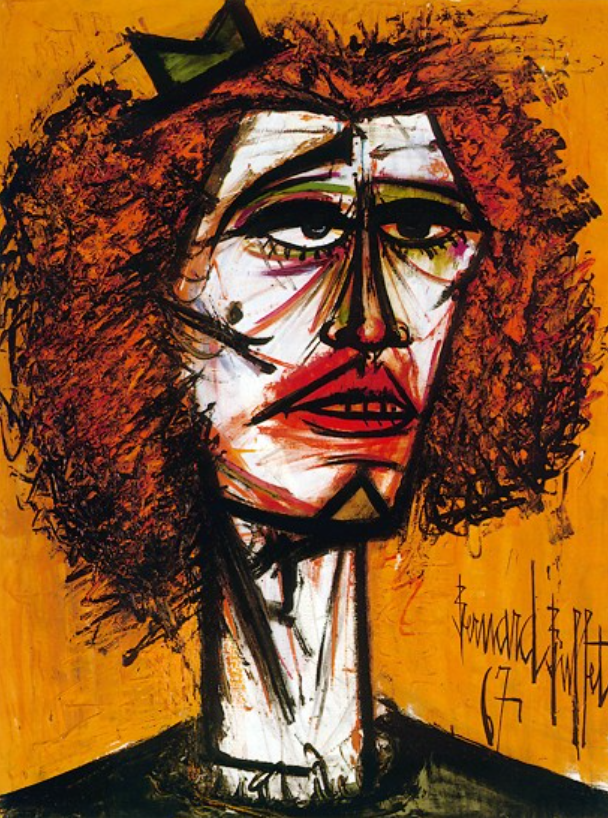
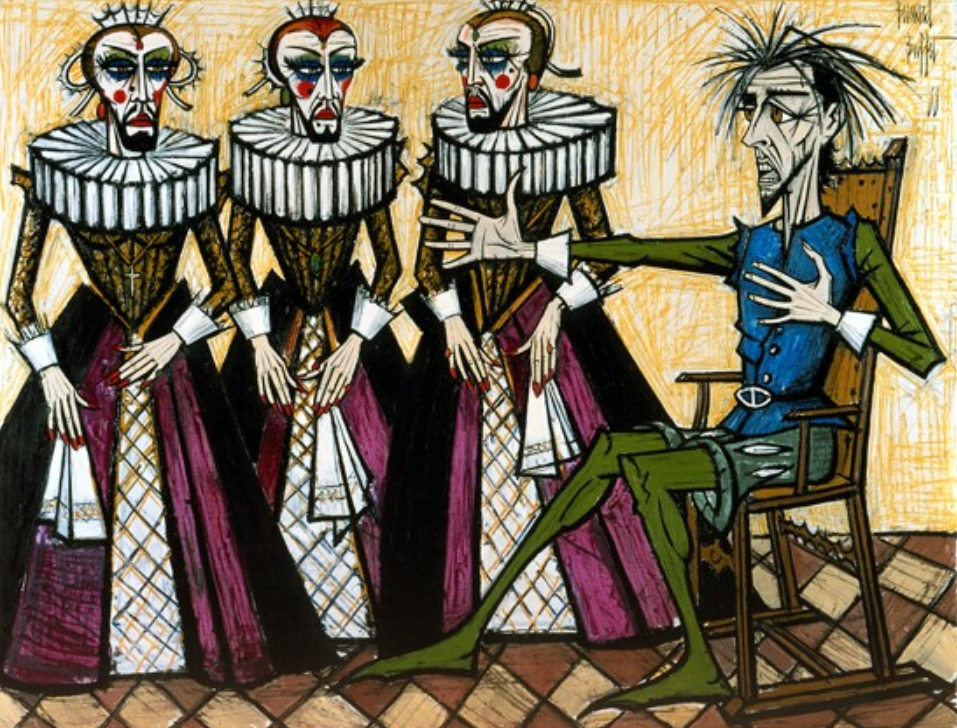
He works mainly with oil, building his canvases through a dense network of crossings and black outlines that rigidify forms and flatten space. His palette, initially limited to greys, blacks and beiges, is gradually enriched with brighter colors without ever abandoning the graphic strength of the line. This sharp drawing, almost calligraphic, becomes his signature: it transforms each subject—clown, still life, landscape or historical scene—into an inner vision, tense between distress and dignity.
A work of cycles and confrontation
From 1952, Buffet organized an annual thematic exhibition at the Galerie Maurice Garnier, creating a true painted diary of his life and obsessions. Des Horreurs de la Guerre (1954) aux Écorchés (1965), from melancholic clowns to literary series (L’Enfer de Dante, Don Quichotte, Vingt mille lieues sous les mers), his art relentlessly questions the human condition. Behind the apparent rigidity of the line is revealed a constant quest: that of a raw emotional truth, stripped of all superfluous ornament. Until his last paintings devoted to Death (1999), Buffet never stopped asserting that painting must look in the face what one often prefers to divert.