Training and switching to abstraction
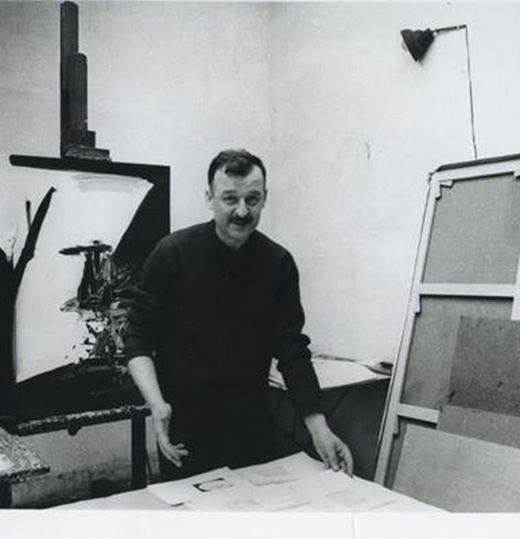
André Marfaing was born in Toulouse into a family that initially destined him for law. He obtained his license, then left the South-West in 1949 for Paris, decided to paint. Self-taught by temperament, he frequents museums and workshops more than schools. The meeting with Alfred Manessier in 1951, then with Pierre Soulages in 1952, accelerated the passage from figuration to abstraction. His first abstract painting dates from 1953. He shares with Soulages the southern origin, the taste for Romanesque art and the love of black, but his path will be more ascetic, closer to the ideogram than to sculptural material.
Black recognition and language
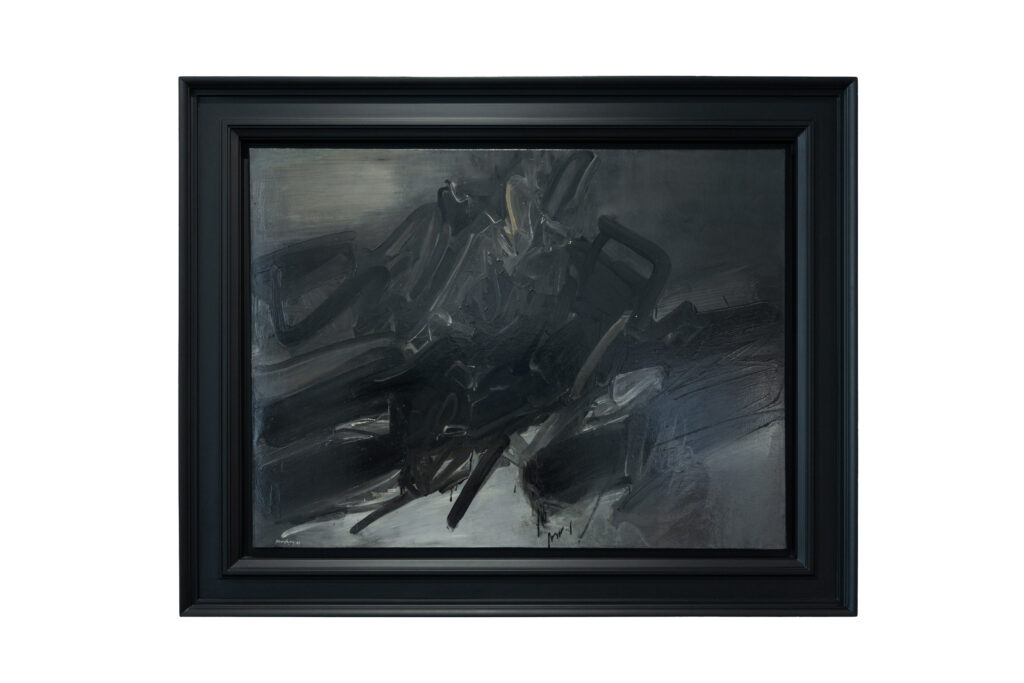
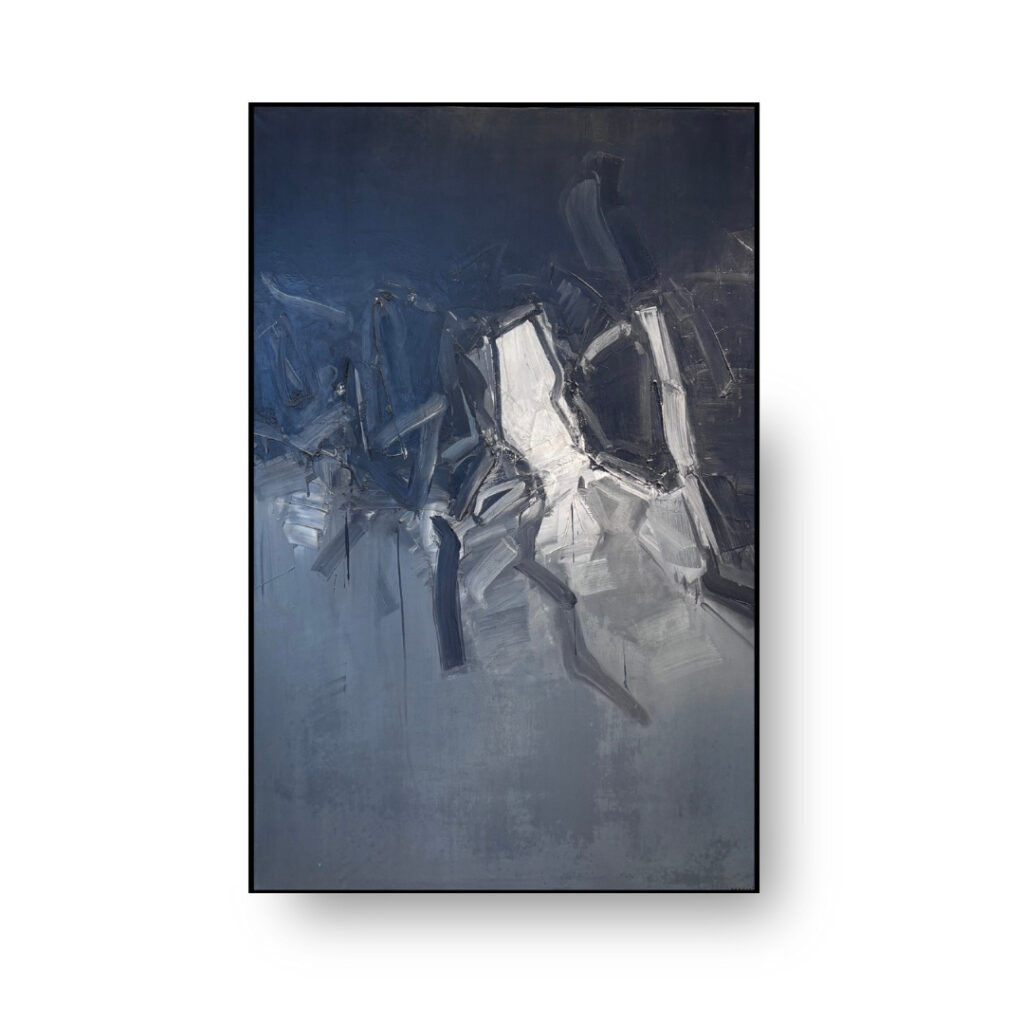
In 1958, the Claude Bernard gallery offered him his first solo exhibition. The following year, he participated in the Documenta of Kassel and the Paris Biennale. In 1962, he represented France at the Venice Biennale alongside Poliakoff, Messagier, Guitet and Manessier. He then joined the Ariel gallery. The 1960s are intense: thick oil, tumultuous gesture, violent contrasts. Then, in the early 1970s, he switched to acrylic, lightened the paste, and broadened the whites. It almost never titles: only the date, format and technique serve as a name. More than nineteen hundred paintings have been listed in the catalogue raisonné.
A work of light rather than color
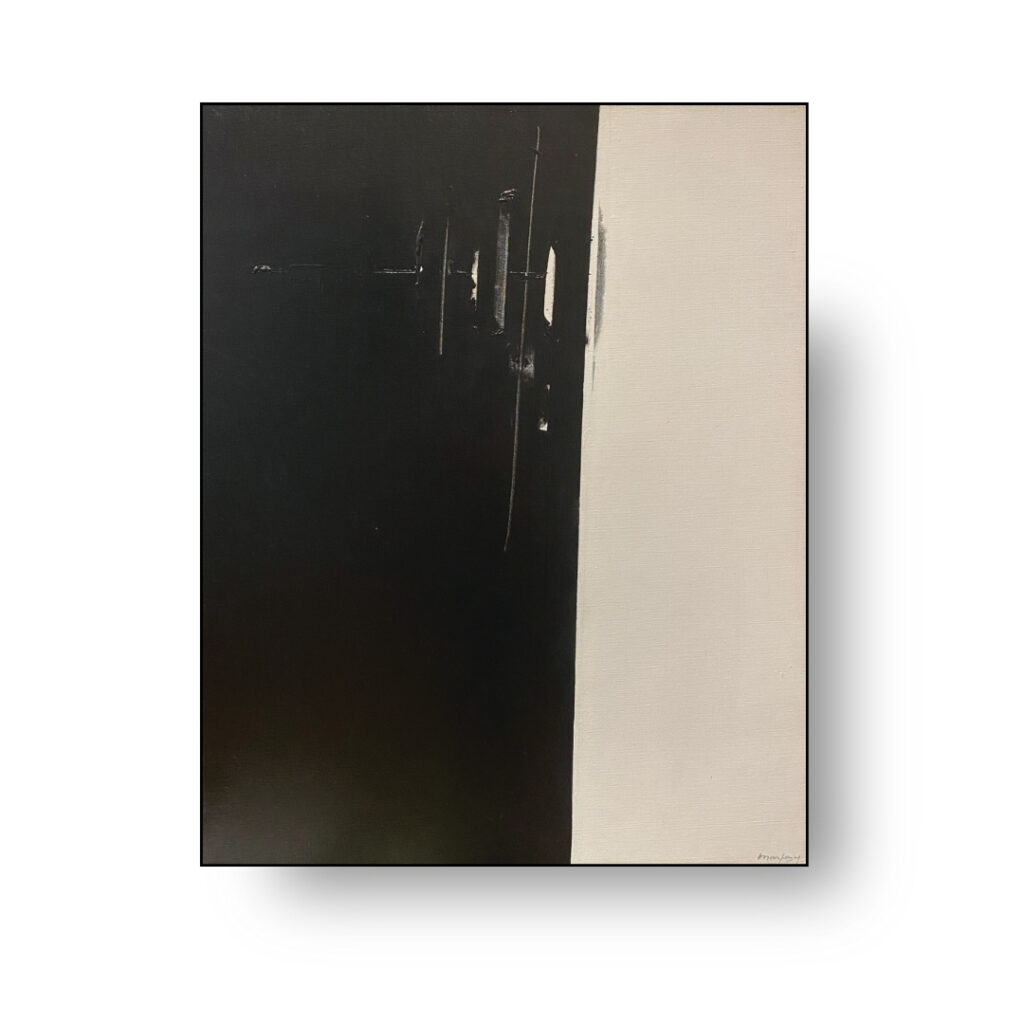
Marfaing died in Paris in 1987, at the age of sixty-one. His work remained for a long time in the shadow of Soulages, then returned to the market and museums. He never stopped saying that black and white had the simplicity and rigor that suited him. Light, in his work, is born from the clash of the two poles, as in a Romanesque abbey. Painting was, in his words, an adventure to escape chaos.